Annual Physical Examination
Dogs and cats age faster than we do and instinctively hide illness. A yearly exam is the best chance to find problems while they are still small.
The Annual Physical Examination for Dogs and Cats
The annual physical examination is the cornerstone of preventive care for every pet. Dogs and cats age much faster than people, and they instinctively hide signs of illness, so a full examination once a year, and twice a year for seniors, gives us the best chance to find problems while they are still small, inexpensive, and treatable. A thorough exam takes only a short time, but it evaluates every major body system from nose to tail. Here is what happens during your pet’s annual visit.
History and Lifestyle Review
The exam begins with a conversation. We ask about your pet’s appetite, thirst, energy level, bathroom habits, diet, behavior, travel, and any changes you have noticed at home, even small ones. Changes such as drinking more water, slowing down on walks, or hiding more often can be the earliest clues to conditions like kidney disease, arthritis, or thyroid problems. You know your pet better than anyone, and your observations guide the rest of the visit.
Weight and Body Condition
Every visit includes an accurate weight and a body condition score. Tracking weight over time is one of the most powerful screening tools we have. Gradual weight gain points toward a nutrition plan before obesity causes joint disease or diabetes, while unexplained weight loss, especially in cats, is often the first measurable sign of illness and prompts further investigation.
Vital Signs
We measure temperature, heart rate, and breathing rate, and we assess hydration and the color of the gums. These basic values tell us a great deal about circulation, oxygen delivery, and overall stability, and they establish a normal baseline that is invaluable if your pet is ever sick or needs anesthesia.
Eyes, Ears, and Nose
Using a light and magnification, we examine the eyes for cataracts, dryness, inflammation, increased eye pressure signs, and retinal changes that can accompany high blood pressure. The ears are checked for wax buildup, infection, mites, growths, and inflammation of the ear canal. The nose and throat area are examined for discharge, airflow, and symmetry.
Mouth, Teeth, and Gums
Dental disease is the most common condition we find in adult pets, and most of it hides below the gum line or at the back teeth where owners rarely look. We check for tartar, gingivitis, loose or broken teeth, oral masses, and bad breath that signals infection. In cats, we look closely for tooth resorption, a painful and very common feline condition. If disease is present, we will recommend a professional cleaning and dental radiographs.
Skin, Coat, and Lymph Nodes
The skin is the body’s largest organ and often reflects internal health. We look and feel for fleas and flea dirt, dryness, greasiness, hair loss, rashes, and any lumps or bumps, and we note the size and location of masses so they can be measured over time or sampled. We also palpate the lymph nodes under the jaw, in front of the shoulders, and behind the knees, since enlargement can indicate infection or, less commonly, cancer.
Heart and Lungs
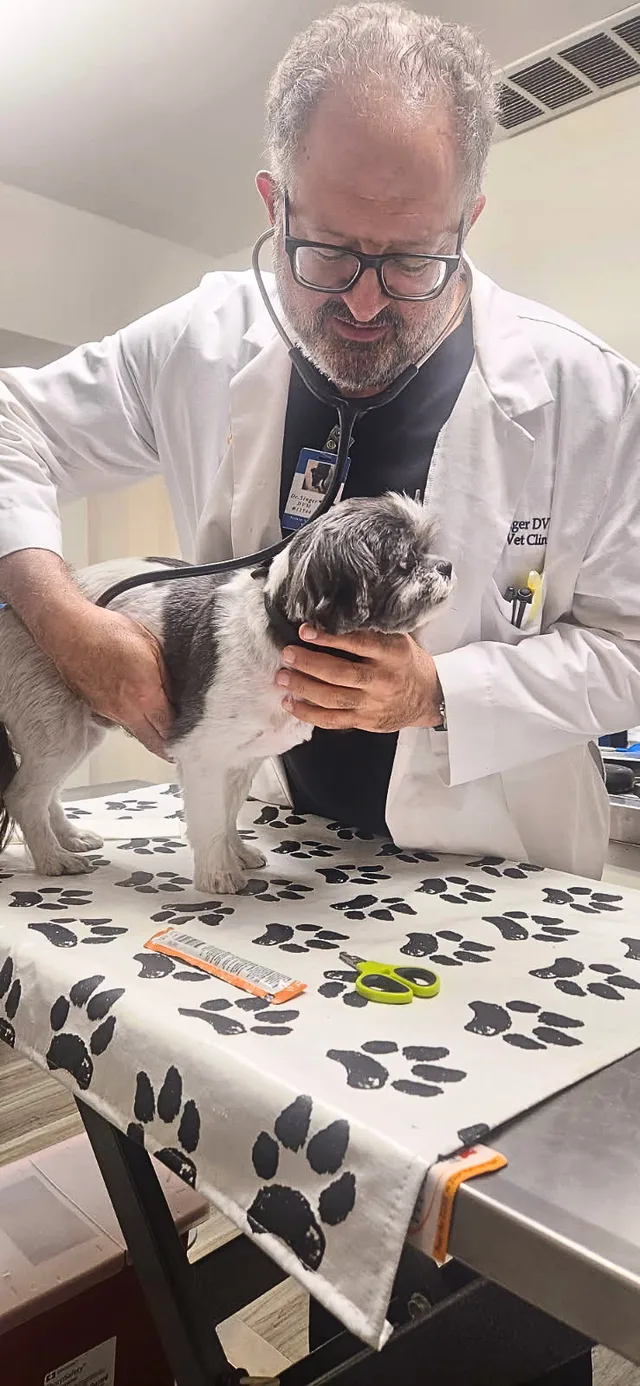
With a stethoscope we listen to the heart for murmurs, abnormal rhythms, and rate changes, and to the lungs for crackles, wheezes, or muffled sounds. Many heart conditions in dogs and cats are detected first as a soft murmur at a routine exam, years before any symptoms appear, and early detection allows monitoring and treatment that can meaningfully extend life.
Abdomen
We gently palpate the abdomen to assess the size and shape of the liver, spleen, kidneys, bladder, and intestines, and to check for pain, fluid, or masses. An experienced set of hands can detect changes such as enlarged kidneys in cats or a distended bladder that warrant further testing.
Muscles, Bones, and Joints
We watch how your pet stands, sits, and walks, then flex and extend the joints, feeling for stiffness, swelling, thickening, muscle loss, or pain. Arthritis is dramatically underdiagnosed in both dogs and cats because pets simply adapt and slow down. Catching it early opens the door to weight management, joint supplements, and safe pain control that keep pets active and comfortable.
Neurologic Assessment
Throughout the exam we observe alertness, reflexes, coordination, and the way your pet responds to its surroundings. Subtle changes in mental sharpness, vision, or balance are noted, particularly in older pets, where they may point to declining senses or age related cognitive change.
Urogenital Area and Anal Glands
We examine the genital area, check for discharge or masses, and in intact pets evaluate the reproductive organs. Mammary glands are palpated for lumps in females. In dogs, the anal glands are checked and expressed if they are full, since impacted glands are a common source of scooting and discomfort.
Nails and Paws
Paw pads are inspected for cracks, foreign material, and growths, and nails are checked for overgrowth or splitting. Overgrown nails change the way a pet walks and can worsen joint strain, so a trim is often part of the visit.
Screening Tests
The physical exam is paired with laboratory screening appropriate to your pet’s age and lifestyle. For dogs, this typically includes an annual heartworm test and a fecal test for intestinal parasites. For cats, fecal testing is routine, and feline leukemia and immunodeficiency virus testing is recommended for cats with outdoor exposure. For middle aged and senior pets, we recommend blood work and a urinalysis to evaluate the kidneys, liver, blood sugar, thyroid, and blood cells, and blood pressure measurement for older cats. These tests regularly uncover disease months or years before outward signs appear.
Vaccines and Parasite Prevention
The visit concludes with a review of your pet’s vaccination status against our protocol and your pet’s lifestyle, along with a check that heartworm, flea, and tick prevention is current and appropriate. Because a full exam is performed first, vaccines are given only to pets healthy enough to respond to them properly.
The Plan Going Home
Before you leave, we summarize what we found, what is normal, and what we recommend watching or addressing, whether that is a dental cleaning, a weight goal, a lump to measure, or simply the same great care continued for another year. Every finding is noted in your pet’s file so that visit by visit, year by year, we build a complete picture of your pet’s health. If you ever notice a change between annual visits, please do not wait for the next one. Call us, since early answers are almost always better ones.