
A Safe and Happy Thanksgiving for Your Dog and Cat
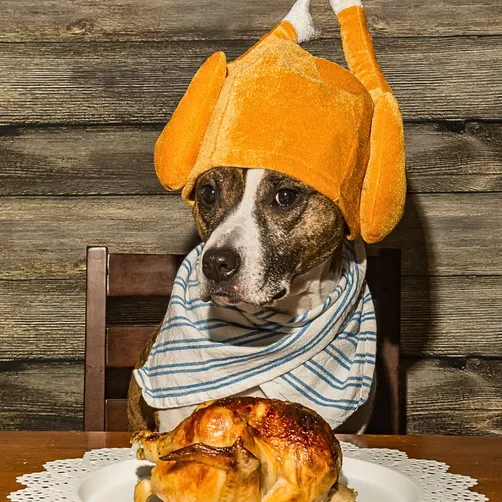
Thanksgiving fills the house with family, laughter, and wonderful smells, and your dog and cat will notice every one of them. A few simple precautions can keep the holiday from ending with an emergency visit.
The Biggest Dangers
- Turkey bones, skin, and drippings: cooked bones splinter and can block or tear the intestines. Fatty skin, gravy, and butter can trigger pancreatitis, a painful inflammation of the pancreas.
- Onions, garlic, chives, and leeks: common in stuffing and gravy, these damage red blood cells. Cats are especially sensitive.
- Grapes and raisins: can cause sudden kidney failure in dogs, even in small amounts.
- Chocolate and sugar-free desserts: chocolate is toxic to dogs and cats, and xylitol, a sweetener in some baked goods and peanut butter, can cause dangerously low blood sugar and liver failure in dogs.
- Raw bread dough and alcohol: dough can expand in the stomach and produce alcohol as it ferments.
- String, foil, and lilies: cats love the string used to tie a turkey, which can cause a serious intestinal blockage. Lilies in holiday centerpieces can cause fatal kidney failure in cats.
Simple Safeguards
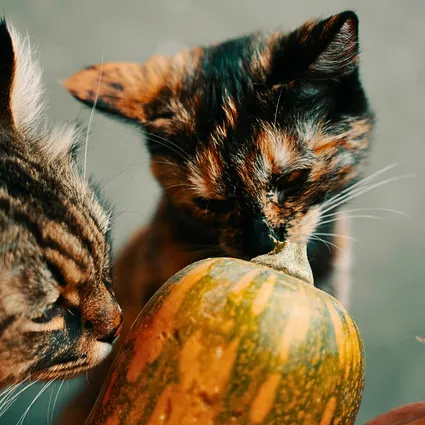
Keep pets out of the kitchen while you cook and serve. Ask guests not to share food from their plates, secure the trash can with a tight lid, and clear the table promptly. A small piece of plain, boneless, skinless white turkey meat or a spoonful of plain canned pumpkin is a safe holiday treat.
Signs and Symptoms
Watch for vomiting, diarrhea, drooling, a painful or swollen belly, a hunched posture, loss of appetite, weakness, pale gums, tremors, or seizures. Some signs, such as kidney damage, may not appear for a day or more.
What to Do and Treatment Options
If you think your pet ate something harmful, act quickly. Call your veterinarian, an emergency hospital, the ASPCA Animal Poison Control Center at (888) 426-4435, or the Pet Poison Helpline at (855) 764-7661. A consultation fee may apply. Do not try to make your pet vomit unless a veterinarian tells you to. Depending on what was eaten, treatment may include safely inducing vomiting, activated charcoal, intravenous fluids, anti-nausea and pain medications, and blood tests to monitor the kidneys and liver. Bones or string that cause a blockage may require surgery. The sooner treatment begins, the better the outcome.